Utility procurement and logistics teams face a freight challenge that most shippers never encounter: the cargo is irreplaceable, the lead times are already stretched to the limit, and a single delivery failure can delay a grid project by months.
A large power transformer ordered today may not arrive for 30 to 36 months. Its price tag has climbed 60 to 80 percent since 2020. The moment it finally ships, the freight decision — which carrier, which trailer, which route — carries more financial weight than most organizations realize. Suboptimal freight choices on power equipment don't just cost money at the point of shipment. They compound across permit fees, escort vehicles, re-staging costs, and project schedule penalties.
This article breaks down the real levers of freight cost optimization for utilities, with a focus on the one area where utility logistics teams consistently leave savings on the table: open deck equipment selection and load engineering.
Why Freight Cost Optimization Looks Different for Utilities
Most freight cost optimization content is written for shippers moving palletized goods in enclosed trailers. The advice centers on lane consolidation, TMS software, and spot market timing. That guidance is largely irrelevant for utilities managing power infrastructure freight.
The equipment is oversized by default. Transformers, switchgear, generators, modular substations, and transmission components routinely exceed standard legal dimensions and weights. That means open deck trailers, oversize/overweight permits, and in many cases pilot car escorts — costs that don't exist in standard freight.
Lead times are already at the edge. With transformer procurement stretching 30 to 36 months from purchase order to delivery, the freight leg is often the last window where schedule slippage can be absorbed — or where a mistake causes a project to miss its in-service date.
Equipment value is extreme. Power transformers in the 100 to 200+ ton range can represent millions of dollars in capital investment. A damage claim doesn't just cost the freight invoice — it can cost years of replacement lead time.
Project dependencies are downstream. A substation can't be energized until all components arrive. One delayed piece of heavy equipment can put an entire crew, a construction schedule, and a utility's grid expansion timeline on hold.
Freight cost optimization for utilities isn't just about finding the lowest rate per mile. It's about minimizing total landed cost, total project risk, and the compounding expense of freight decisions made without full knowledge of what the cargo actually needs.
The Hidden Cost Driver: Trailer Type Mismatch
One of the most overlooked sources of wasted freight spend in utility logistics is paying for the wrong trailer — or worse, forcing freight onto equipment that doesn't fit.
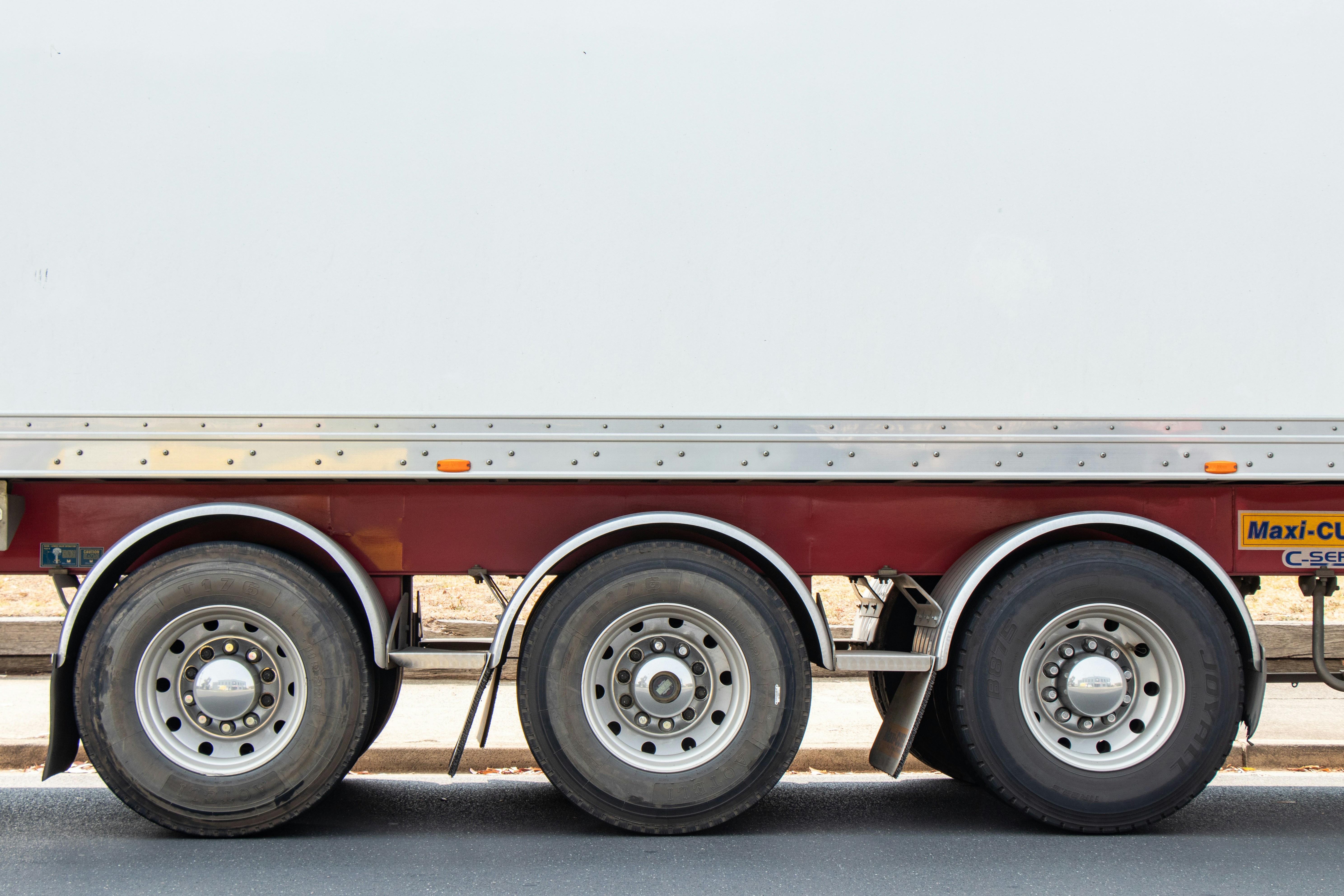
Open deck transportation includes a wide range of trailer configurations. Each serves a different weight, dimension, and cargo profile. When a carrier matches equipment to load correctly, shippers can maximize payload per trip, minimize permit complexity, reduce move count, and avoid damage from improper securement.
"Paying for the wrong trailer is one of the most overlooked sources of wasted freight spend — and it's entirely avoidable with the right carrier."
Flatbed Trailers — Handle cable reels, steel structures, switchgear modules, and lighter distribution equipment. Legal cargo weight up to ~48,000 lbs. Defaulting to flatbed on loads that need specialty equipment creates unnecessary permit costs.
Step Deck (Drop Deck) Trailers — Lower cargo deck for additional height clearance without an overheight permit. The right step deck configuration can eliminate a permit tier entirely — a direct cost savings on taller switchgear or control house components.
Removable Gooseneck (RGN) Trailers — The workhorse for heavy power equipment. Multi-axle RGN configurations distribute weight to stay within state axle weight limits, directly reducing permit costs and weight-based routing restrictions.
Double Drop (Lowboy) Trailers — Maximum height clearance via an extremely low center deck. Keeps tall transformers or switchhouses within height limits that would otherwise require a superload permit — the most expensive permit category.
Perimeter Frame Trailers — Surround the cargo rather than support it from below, distributing weight across a larger footprint. Essential for the heaviest modular substations and switchhouses. A carrier without perimeter frame access will either refuse the freight or create excessive permit costs trying to move it on the wrong equipment.
StreetMAX and Specialty Trailers — For ultra-wide or overweight components requiring special routing, bridge analysis, and state engineering review. A freight partner who understands this process builds the timeline into project planning; one who doesn't delivers the bad news after the equipment is ready to ship.
How Trailer Selection Directly Reduces Freight Cost
Fewer trips. When a carrier maximizes legal payload on the right trailer, fewer moves transport a project's full equipment list. On large substation builds with dozens of components, 9 trips versus 12 is a significant budget line.
Lower permit spend. Multi-state oversize permit fees run $200 to $600 per move, before adding escort vehicle costs of $2 to $5 per mile per vehicle. Selecting the right trailer to stay within lower permit categories reduces this cost directly.
Reduced escort requirements. Width and weight thresholds determine pilot car requirements. A carrier who specs equipment to keep loads just inside a width threshold can eliminate a second escort vehicle — saving thousands of dollars per long-haul move.
Lower damage claims. The right trailer provides the correct securement points and deck configuration for the specific load. Beyond the immediate claim cost, a damaged transformer on a 30+ month lead time is a project-ending event.
The Cost of a Generalist Carrier on Specialized Freight
For utility companies running open solicitations, the lowest bid often comes from a generalist carrier who wins the rate and figures out the equipment later. This consistently generates hidden costs:
Re-quoting after the fact — The carrier quotes flatbed, then comes back with an upcharge when they find the load needs an RGN or a superload permit.
Permit delays — A carrier unfamiliar with superload routing underestimates state approval timelines, pushing back the delivery date.
Equipment unavailability — Specialty trailers have limited availability. A generalist without heavy haul market relationships can't access them on short notice.
Wrong weight distribution — Improper axle spacing creates permit violations en route — detour routing, fines, or forced re-staging.
The actual freight rate is only part of the landed cost equation. Total cost includes the rate, permit fees, escort costs, damage risk, and the schedule impact on a project that may have millions of dollars per week in downstream consequences.
Practical Freight Cost Optimization Strategies for Utilities
1. Consolidate equipment moves by project phase. Batch deliveries by phase rather than shipping each piece as it becomes available. Consolidated moves reduce per-unit permit costs and escort fees while improving carrier scheduling leverage.
2. Plan freight timelines alongside equipment lead times. Freight planning should begin when the purchase order is placed — not when equipment is ready to ship. Early planning enables route surveys, bridge analysis, and state agency coordination to complete before the delivery window.
3. Engage a specialist before the RFQ, not after. A specialized open deck carrier involved during project planning can advise on load sequencing, trailer specs, and permit strategy — input that can reduce total freight spend by 10 to 20 percent on complex multi-component projects.
4. Request itemized quotes that include permit and escort costs. A quote showing only line-haul rate is incomplete for oversize power equipment. Require carriers to itemize permit fees, escort costs, and surcharges. This makes bids genuinely comparable and eliminates re-quoting after carrier award.
5. Leverage annual permit structures for recurring lanes. Annual blanket permits cost $100 to $500 per state, compared to individual trip permit fees that can exceed that per move. Utilities with recurring freight on established lanes should explore this with their carrier.
6. Evaluate carrier equipment fleet, not just rate card. Assess the depth of the trailer fleet and access to specialty equipment. A carrier with shallow resources hits capacity ceilings at exactly the wrong moment — during storm response or emergency grid repair when specialized equipment is already in demand.

The Specialist Advantage: Why Freight Knowledge Is a Budget Line Item
There is a measurable financial difference between a freight partner who treats utility cargo as just another oversize load and one who understands power infrastructure equipment at the component level.
Load engineering — Knowing a transformer's center of gravity requires specific blocking positions on a given trailer deck prevents both damage and load rejections at the state permit office.
Trailer optimization — Understanding the weight distribution math on a 4-axle RGN versus a 5-axle configuration determines whether a move requires a superload permit or a standard overweight permit — often a $1,000+ difference per move.
Equipment familiarity — Knowing a modular substation can split across two perimeter frame trailers instead of requiring a single ultra-wide move can eliminate an escort tier and weeks of routing coordination.
For utilities managing active grid expansion, storm recovery fleets, or aging infrastructure replacement programs, this knowledge isn't a soft value — it's a direct reduction in freight spend and project risk.
Frequently Asked Questions